The Duty of Light Weight Aluminum Foundry in Various Industries: Applications and Maintenance Insights
Light weight aluminum foundries are vital in several sectors, giving light-weight and resilient components that significantly affect item efficiency. Their applications span from automobile engine blocks to aerospace architectural parts. However, the efficiency of these shops depends greatly on rigorous maintenance practices and the combination of sophisticated innovations. Understanding these dynamics reveals a complex interaction of technology and custom, prompting additional expedition right into the future patterns shaping this crucial sector.
Summary of Light Weight Aluminum Foundries and Their Procedures
Light weight aluminum factories play an important role in the manufacturing sector, focusing on the casting of light weight aluminum components. These facilities use different procedures to transform raw aluminum right into completed products, beginning with melting scrap or ingots in high-temperature furnaces. Once melted, the light weight aluminum is put into molds, which can be made from steel, sand, or ceramic, depending on the wanted surface and application.
After cooling, the cast elements undertake added procedures such as cutting, machining, and surface ending up to satisfy aesthetic requirements and certain tolerances. Casting Foundry. Quality control is extremely important; foundries carry out strenuous screening approaches to determine that the end products meet sector criteria
The adaptability of light weight aluminum as a product permits a large array of styles and elements, making foundries crucial for countless industries. Their know-how in handling aluminum guarantees that suppliers obtain high-quality components essential for subsequent assembly and usage.
Applications in the Automotive Market
While the automotive sector increasingly looks for lightweight products to boost fuel effectiveness and performance, light weight aluminum shops have actually ended up being crucial providers of various elements. These foundries create critical parts such as engine blocks, transmission real estates, and wheels, which contribute to lowered lorry weight and improved handling. The flexibility of light weight aluminum enables intricate geometries, making it suitable for detailed layouts in both aesthetic and architectural applications.
Furthermore, aluminum castings are favored for their superb rust resistance and recyclability, straightening with the market's sustainability goals. The use of aluminum in electric automobiles is also growing, as it sustains reliable battery layouts and thermal monitoring systems. With continual advancements in casting technologies, light weight aluminum factories are furnished to satisfy the ever-evolving needs of the automotive market, guaranteeing that manufacturers can supply high-performance lorries that satisfy consumer expectations for performance and sustainability.
Aerospace Sector Application of Light Weight Aluminum Castings
The aerospace sector significantly counts on aluminum castings for a variety of essential applications, driven by the demand for high-strength and lightweight materials. Light weight aluminum castings play a pivotal role in manufacturing elements such as engine places, brackets, and architectural airframe components. The inherent buildings of light weight aluminum, consisting of superb corrosion resistance and exhaustion toughness, make it a suitable selection for aerospace applications, where performance and security are critical.
Light weight aluminum castings promote intricate designs and geometries that can improve aerodynamic efficiency. The capability to produce complicated forms while lessening weight is essential in optimizing gas effectiveness and overall aircraft performance. Makers use innovative spreading techniques such as sand and die casting to accomplish the required accuracy and top quality. Furthermore, the recyclability of aluminum aligns with the market's sustainability goals, additionally strengthening its importance in aerospace. As technology developments, the use of light weight aluminum castings is anticipated to expand, fulfilling the evolving demands of the aerospace field.
Building Industry and Aluminum Foundries
In the building and construction field, light weight aluminum factories play a significant function by supplying materials that improve architectural integrity and lower total weight in building projects. Light weight aluminum castings are favored for their strength-to-weight ratio, making them excellent for various applications, consisting of home windows, doors, and architectural parts. The lightweight nature of aluminum not only assists in simpler handling and transport however also adds to power performance in buildings.
Moreover, aluminum's resistance to rust assurances longevity and reduces upkeep costs, which is essential for infrastructure jobs. Factories produce custom-made components tailored to certain building layouts, permitting ingenious construction options. In addition, advancements in light weight aluminum alloy modern technology have broadened the array of applications, enabling using aluminum in high-stress environments. By sustaining lasting structure practices, light weight aluminum foundries add to the general efficiency and durability of construction jobs, making them crucial partners in the industry.
Durable Goods and Family Applications
Aluminum shops considerably add to the customer products industry by generating a variety of family things that integrate capability with aesthetic allure. From cookware to home design, aluminum acts as a flexible product, ensuring items are both light-weight and durable. Popular products include cookware, such as pots and pans, which take advantage of aluminum's excellent thermal conductivity, making cooking more reliable.
In addition, aluminum's deterioration resistance enhances the durability of household products, reducing the demand for constant replacements. Attractive components, such as aluminum picture frameworks and lighting fixtures, showcase the steel's capacity to be built into detailed layouts while preserving a contemporary visual.
The green nature of light weight aluminum, being recyclable, straightens with customer choices for lasting items. Casting Foundry. Subsequently, light weight aluminum foundries play an important function in meeting the diverse needs of homes, providing crucial products that enhance day-to-day living while resolving ecological problems
Upkeep Ideal Practices for Casting Devices
Effective upkeep of spreading equipment is crucial for peak efficiency and long life. Regular equipment inspections, appropriate lubrication and cleaning, and detailed driver training programs are important elements of an effective upkeep method. Carrying out these finest methods can greatly lower downtime and boost total production effectiveness in aluminum shops.
Routine Equipment Inspections
Normal equipment inspections play an essential function in maintaining the performance and safety of casting procedures. These examinations involve an organized examination of equipment link to identify wear, damage, or prospective failures before they escalate into expensive malfunctions. By sticking to a routine evaluation routine, shops can identify that all casting machinery runs at peak performance, thus decreasing downtime and optimizing efficiency. Inspections must incorporate vital parts such as mold and mildews, heating systems, and cooling systems, permitting the timely substitute or repair work of parts. Additionally, documents of evaluation searchings for is necessary for tracking equipment background and educating future upkeep choices. Inevitably, regular inspections add considerably to the durability of equipment and the general success of light weight aluminum factory operations.

Lubrication and Cleansing
Appropriate lubrication and cleaning are crucial elements of upkeep practices for casting tools in foundries. Normal lubrication lessens wear and tear on machinery, making sure that components operate smoothly and successfully. It is important to make use of the suitable lubes specified by makers, as different devices may call for diverse substances to operate at peak efficiency.
Cleaning tools gets rid of pollutants and debris that can hinder operations and result in problems in castings. Arranged cleaning regimens must be developed to stop accumulation and prolong devices life. On top of that, operators ought to comply with safety and security methods while dealing with cleansing representatives to preserve a risk-free workplace. By prioritizing lubrication and cleansing, factories can enhance the integrity and performance of their spreading tools, eventually contributing to better manufacturing top quality.
Operator Training Programs
While preserving casting tools is necessary for ideal performance, substantial driver training programs play a considerable function in ensuring that workers are well-equipped to deal with maintenance tasks effectively. These programs must concentrate on the details operational elements of light weight aluminum foundry equipment, including security methods, troubleshooting methods, and routine upkeep treatments. By giving hands-on training and considerable academic understanding, drivers can create a much deeper understanding of devices performance and potential problems. Normal assessments and correspondence course can boost ability retention and adjust to technical developments. Ultimately, purchasing operator training not just improves overall manufacturing performance however additionally reduces downtime, causing boosted security and extended tools life-span in the aluminum factory sector.
Future Trends in Aluminum Foundry Applications
The future of aluminum shop applications is poised for transformation with innovative casting innovations that boost efficiency and accuracy. In addition, lasting production methods are getting grip, showing a growing dedication to ecological duty within the market. Moreover, the integration of Market 4.0 principles is readied to reinvent procedures, enabling smarter making processes and real-time information use.
Advanced Spreading Technologies
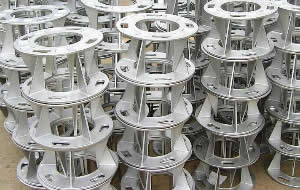
Technologies in advanced casting innovations are poised to transform light weight aluminum foundry applications, driving performance and accuracy in the manufacturing process. Techniques such as 3D printing and advanced die-casting are acquiring traction, making it possible for the manufacturing of complicated geometries that standard methods battle to achieve. Furthermore, the assimilation of automation and AI in the casting process improves quality assurance and reduces material waste. These innovations promote quick prototyping, enabling quicker design versions and minimized time-to-market. Advancements in mold and mildew products and cooling down systems enhance thermal administration, guaranteeing constant component high quality. As industries require lighter, stronger elements, these advanced casting innovations are coming to be crucial in industries such as auto, aerospace, and electronic devices, placing light weight aluminum foundries at the leading edge of development.
Lasting Manufacturing Practices
Advanced casting innovations not only boost performance and accuracy but also pave the means for lasting production practices in light weight aluminum shops. These techniques concentrate on lowering waste, power usage, and emissions throughout the manufacturing procedure. The fostering of recycled aluminum is progressively prioritized, minimizing the requirement for key metal removal and lowering the ecological footprint. In addition, developments in mold products and cooling down strategies contribute to power financial savings and faster manufacturing cycles. Implementing closed-loop water systems better sustains sustainability by minimizing water use and protecting against contamination. As factories accept these eco-friendly approaches, they not only follow laws but likewise fulfill the expanding need for lasting products throughout different sectors, reinforcing their dedication to ecological stewardship.
Sector 4.0 Assimilation
As aluminum factories significantly accept Sector 4.0 combination, they are leveraging smart modern technologies to enhance production her response procedures and improve operational performance. The adoption of IoT devices allows real-time surveillance of equipment and production metrics, assisting in predictive maintenance and decreasing downtime. Advanced information analytics and artificial intelligence permit enhanced decision-making, resulting in a lot more specific spreading and lowered waste. Robotics and automation enhance repetitive tasks, improving labor efficiency. Furthermore, digital twins allow virtual simulations of factory operations, helping in process optimization and layout renovations. This combination not only improves productivity but also sustains sustainability initiatives by lessening power intake and resource use, positioning light weight aluminum factories to satisfy the progressing demands of various industries in a competitive market landscape.
Frequently Asked Questions
What Are the Environmental Effects of Light Weight Aluminum Foundries?
Light weight aluminum shops add to ecological impacts via greenhouse gas discharges, energy usage, and waste generation. In addition, they may posture risks of air and water air pollution, necessitating efficient monitoring techniques to view it minimize these unfavorable results.
Just How Do Light Weight Aluminum Foundries Ensure Item High Quality?
Light weight aluminum shops assure item high quality through extensive high quality control procedures, consisting of product examinations, precise temperature monitoring, and adherence to industry standards. Continuous training of employees and implementation of advanced innovations further boost the uniformity of their output.
What Safety Steps Are in Location in Aluminum Foundries?
Light weight aluminum factories apply precaution consisting of protective equipment for workers, emergency reaction strategies, ventilation systems to decrease fumes, normal safety training, and adherence to industry guidelines to ensure a secure workplace and stop accidents.
Just How Do Shops Handle Waste and Recycling?
Foundries handle waste and recycling by executing systems for gathering scrap light weight aluminum, recycling materials, and sticking to environmental guidelines. They prioritize decreasing waste through efficient processes and investing in modern technology for efficient recycling efforts.
What Accreditations Are Pertinent for Aluminum Foundries?
Relevant qualifications for light weight aluminum shops include ISO 9001 for quality administration, ISO 14001 for ecological monitoring, and AS9100 for aerospace requirements. These qualifications assure conformity, improve quality assurance, and promote lasting practices within the factory operations.
Aluminum foundries play an important function in the manufacturing market, specializing in the casting of light weight aluminum parts. While the automotive market progressively seeks light-weight products to improve gas performance and performance, light weight aluminum foundries have come to be crucial distributors of numerous components. Additionally, improvements in aluminum alloy modern technology have increased the array of applications, enabling the use of aluminum in high-stress atmospheres. The future of aluminum shop applications is positioned for makeover via innovative casting modern technologies that improve effectiveness and precision. As light weight aluminum foundries significantly embrace Industry 4.0 combination, they are leveraging wise modern technologies to enhance production processes and boost operational efficiency.